
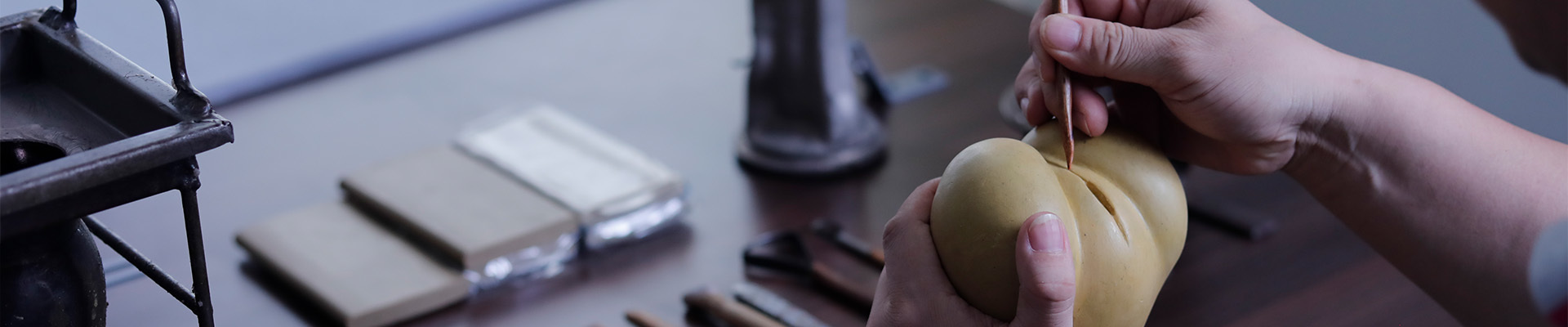
The difficult part is determining whether that supplier can actually support your business in the long term.
Before placing an order, most experienced buyers want answers to a few important questions:
Are you really a manufacturer?
Can you handle stable mass production?
How do you control product quality?
What happens if something goes wrong?
Can you manufacture according to my brand requirements?
How can I reduce the risk of placing a large order?
For brands, wholesalers, importers, and distributors, these questions often matter more than a small difference in unit price.
Once you move into bulk purchasing, your supplier's production capability, quality consistency, communication, and problem-solving ability can directly affect your inventory, sales plans, and brand reputation.
Here are six things you should evaluate before choosing an adult wellness manufacturing partner.
Many suppliers can provide a catalog and a quotation.
That does not necessarily mean they manufacture the products themselves.
For buyers looking for long-term sourcing, OEM, ODM, or private-label cooperation, understanding who is actually responsible for manufacturing is important.
A capable manufacturer should be able to clearly explain:
Where the products are made
Who handles product development
How molds and tooling are managed
How materials are processed
How products are assembled
How functions are tested
How quality is inspected
How packaging is completed
Who is responsible when a product needs to be modified
Working directly with a manufacturer is not only about getting a better price.
The bigger advantage is communication.
If you need to change the product structure, color, function, packaging, or other specifications, you can communicate directly with the team responsible for making the product.
At XISE Industrial, we specialize in adult wellness product manufacturing and maintain our own production, assembly, quality-control, and product-development capabilities.
We work with brands, wholesalers, and distributors on OEM, ODM, private-label, and customized manufacturing projects.
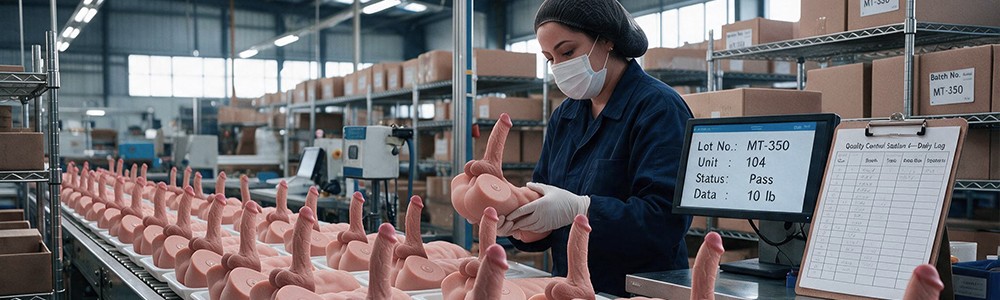
This is one of the most important questions in B2B sourcing.
Producing one good sample is very different from producing hundreds or thousands of consistent units.
Mass production introduces another level of complexity.
Buyers should consider questions such as:
Will the color remain consistent?
Will the material feel the same from batch to batch?
Will electronic functions perform consistently?
Will dimensions and structures stay within specification?
Will assembly quality remain stable?
Will logos and packaging follow the approved requirements?
For a brand, one perfect sample is not enough.
What matters is whether:
Unit 1, unit 500, and the next production batch can all meet the same standard.
That is why buyers should evaluate more than the initial sample. They should also understand the supplier's production system, workforce, quality procedures, and experience with bulk orders.
XISE has a team of more than 200 employees and an established manufacturing system covering production, assembly, inspection, and order fulfillment.
This allows us to support both bulk production and repeat orders for long-term customers.

Almost every supplier will say:
“Our quality is very good.”
For a professional buyer, that statement alone means very little.
A better question is:
How do you control quality during production?
A reliable manufacturer should be able to explain how products are inspected from raw material to finished goods.
Depending on the product, this may include:
Raw material inspection
Production-process inspection
Molding inspection
Assembly inspection
Functional testing
Appearance inspection
Packaging verification
Final product inspection
At XISE, quality checks are built into key stages of the manufacturing process rather than being treated only as a final step before shipment.
Different products also require different inspection priorities.
Electronic and functional products may require additional performance testing, while silicone and TPE products require careful attention to material consistency, surface quality, molding results, and appearance.
If a customer has specific inspection standards or testing requirements, these should be discussed before mass production begins.
Effective quality control is not simply about finding defective products at the end. It is about identifying potential problems as early as possible during production.
No responsible manufacturer can realistically promise that production will never encounter a problem.
Manufacturing involves materials, tooling, assembly, electronics, packaging, logistics, and many other variables.
The more important question is:
How does the supplier respond when a problem occurs?
A reliable manufacturing partner should be willing to:
Respond to the issue promptly
Investigate the cause
Determine whether the issue is related to production, transportation, operation, or another factor
Discuss a practical solution
Improve future production when necessary
A supply-chain relationship should not end when the goods leave the factory.
For brands that require repeat orders and long-term supply, communication and problem-solving are an important part of supplier reliability.
In many cases, you learn more about a manufacturer when something goes wrong than when everything goes perfectly.
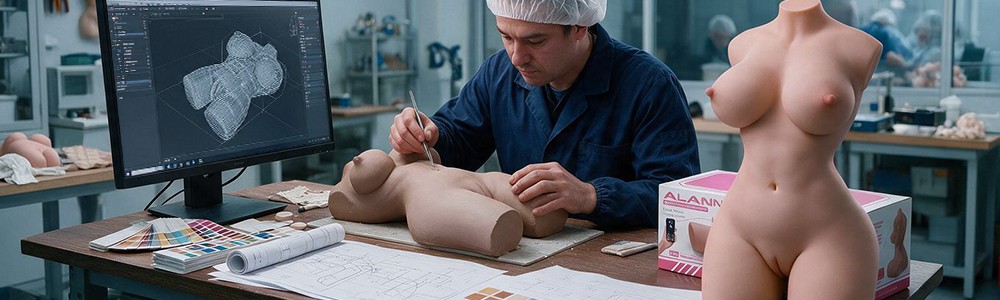
Some buyers initially think OEM simply means:
Putting a logo on an existing product.
For serious brands, customization usually goes much further.
A complete OEM or ODM project may involve:
Product colors
Materials
Functions
Structural changes
Branding and logos
Packaging
User manuals
Accessories
Brand visual requirements
New product development
Before choosing a manufacturer, buyers should understand how much customization the factory can actually support.
XISE provides OEM, ODM, Private Label, Custom Packaging, and Product Development services.
If you already have a developed product specification or design, we can evaluate its manufacturing feasibility.
If you only have an initial concept, the project can begin with discussions around appearance, structure, materials, functions, tooling, and mass-production feasibility.
For brands, the value of a manufacturing partner should go beyond selling products from an existing catalog.
A strong manufacturer should also be able to help turn product ideas into manufacturable products.
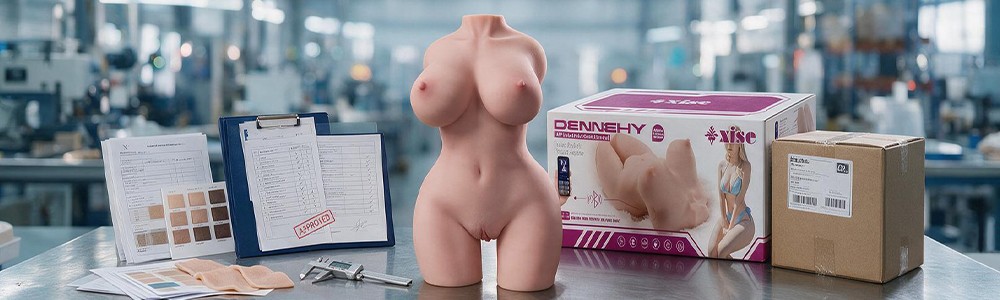
Many sourcing problems do not begin during production.
They begin before production because important details were never clearly confirmed.
For example:
The buyer and supplier may understand a color differently.
The logo size may not have been approved.
Packaging materials may not have been clearly specified.
Product functions may not have been fully documented.
Accessory quantities may be unclear.
Quality requirements may never have been formally agreed upon.
If these issues are discovered after mass production, correcting them can be expensive and time-consuming.
For a first cooperation, a more structured process can help reduce risk:
Requirement Confirmation → Quotation → Sample Approval → Specification Confirmation → Packaging Approval → Mass Production → Quality Inspection → Shipment
Before production begins, buyers should clearly confirm:
Product model
Materials
Colors
Dimensions
Functions
Logo requirements
Packaging
User manuals
Accessories
Order quantity
Quality standards
Delivery requirements
For more complex OEM or ODM projects, additional steps may be required for product structure, tooling, prototypes, and testing.
The goal of risk management is not to assume that problems will never happen.
It is to build a clear process that identifies and solves as many potential problems as possible before mass production begins.
Price will always be an important part of sourcing.
But for brands building a long-term business, the lowest purchase price does not always mean the lowest total cost.
Unstable quality, production delays, packaging mistakes, inconsistent batches, and poor communication can quickly create additional costs for your business.
Before selecting an adult wellness manufacturer, consider the bigger picture:
Is the supplier an actual manufacturer?
Can they support stable mass production?
Do they have a clear quality-control process?
Will they respond when problems occur?
Can they support real OEM, ODM, and brand customization?
Can they provide reliable long-term supply?
For brands, wholesalers, importers, and distributors, the goal should not simply be finding a supplier that can complete one order.
The better goal is finding a manufacturing partner that can support your product development, production, quality, and supply-chain needs over the long term.
XISE Industrial specializes in adult wellness manufacturing and works with global brands, wholesalers, and distributors on OEM, ODM, private-label, custom-packaging, product-development, and bulk-production projects.
If you are looking for a new adult wellness manufacturing partner, tell us about the product you are sourcing, your expected order quantity, and your customization requirements.
We can evaluate the project from a product, manufacturing, and supply-chain perspective and help determine the next step.